
Revolutionizing Customer Experience: The Power of Contextual AI in Voice Triage
We all remember the frustration: a phone IVR system that felt less like a conversation and more like a keyword matching game. You might utter a word like “billing,” and regardless of whether you were saying “I have a question about billing” or “I was just transferred from billing,” the system would ruthlessly send you to a pre-determined, narrow queue. Getting back on track after a misrouted call was nearly impossible.
Fortunately, Artificial Intelligence (AI) and Machine Learning (ML) have dramatically advanced beyond that rigid model. The modern standard isn’t about keyword spotting; it’s about Natural Language Understanding (NLU).
The Shift to True Context and Sentiment
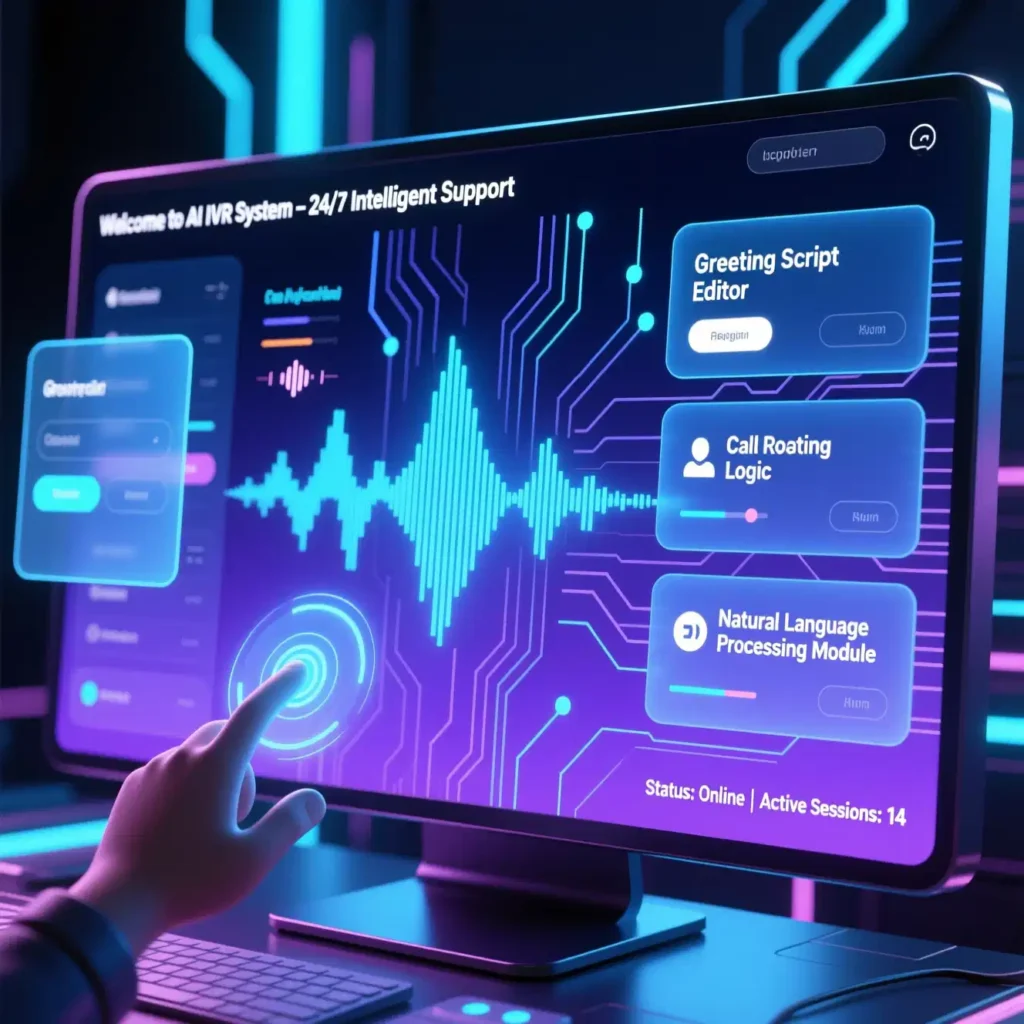
Today’s intelligent IVRs are designed to understand the context and intent behind a caller’s entire phrase. This increased cognitive ability is critical for providing a genuinely better customer experience.
Instead of just processing words, advanced AI systems can now analyze:
- Sentiment: Is the caller frustrated, calm, or confused?
- Intonation: How are they stressing certain words?
- Emotional State: Is there urgency or distress in their voice?
This depth of understanding allows the system to engage in a more natural, human-like dialogue, leading to faster resolution and significantly reduced caller frustration.
Meeting the Digital Challenge in Healthcare
The need for intelligent, conversational AI is most urgent in high-stakes industries like healthcare. A primary industry goal is to shift 50% of all patient interactions to digital channels by 2030. This kind of transition requires automation that can handle complex, multi-layered patient needs, not just simple tasks.
Consider a common scenario: a patient uses an automated assistant to book a cardiology appointment for 2 PM on Wednesday. Moments later, the patient realizes they are busy and interrupts the confirmation: “Wait a minute, I think I’m busy all day Wednesday.”
An underpowered or legacy AI system might fail here, simply registering the word “Wednesday” and getting stuck. An Intelligent IVR, however, uses conversational recovery. It recognizes the speaker’s intent has shifted from confirmation to cancellation/rescheduling, and it can then proactively ask the most logical human-like question: “Understood. What day and time works better for you?” This ability to manage conversational friction is the difference between a successful digital interaction and a frustrated patient demanding a human operator.
Intelligent Workflows: Where AI Outperforms Humans
The true power of next-generation AI is its ability to handle disjointed processes—complex, non-linear requests that even a human agent might struggle to track perfectly.
For example, imagine placing a detailed order: “I’d like a cheeseburger with American cheese and a large soda.” Then, after the system processes the order, you interject: “Actually, change the cheese to Swiss, remove the onions, and make that large soda a diet soda.”
While the human brain often struggles to keep track of multiple, sequential changes within a single workflow, an intelligent AI system can log, track, and correctly verify all three disjointed modifications instantly and correctly. This precision is essential in fields requiring high accuracy, from manufacturing and logistics to critical patient data management.
Summary: A Strategic Imperative for Automation
The evolution of IVR is no longer just a customer service upgrade; it is a strategic necessity. With global staff shortages and skill gaps intensifying across all industries, the capacity of human staff must be focused on the most critical and empathetic tasks.
Automation must fill the operational holes, and the more capable the technology becomes, the wider its applicability. This need is fueling rapid development, meaning that the capacity for Super IVRs to handle more natural, contextual, and even more accurate interactions than humans is quickly approaching. You may soon interact with a sophisticated AI and never even be aware of it. Necessity is truly the mother of invention in the automation space.
Primas Group is actively working at the forefront of this evolution, developing disruptive, advanced Guided Self-Service Automation solutions for various industries, leveraging cutting-edge AI, Speech, and Natural Language Understanding technologies from the world’s best providers.